
Strawberry fields and flatwoods sand
Hydroseeding in Plant City, FL
Seeding plans built for sandy soil, heavy summer rain and the coldest nights in the county.
- We come out, measure, and quote in writing at no charge
- Seed choice matched to sun, irrigation and soil
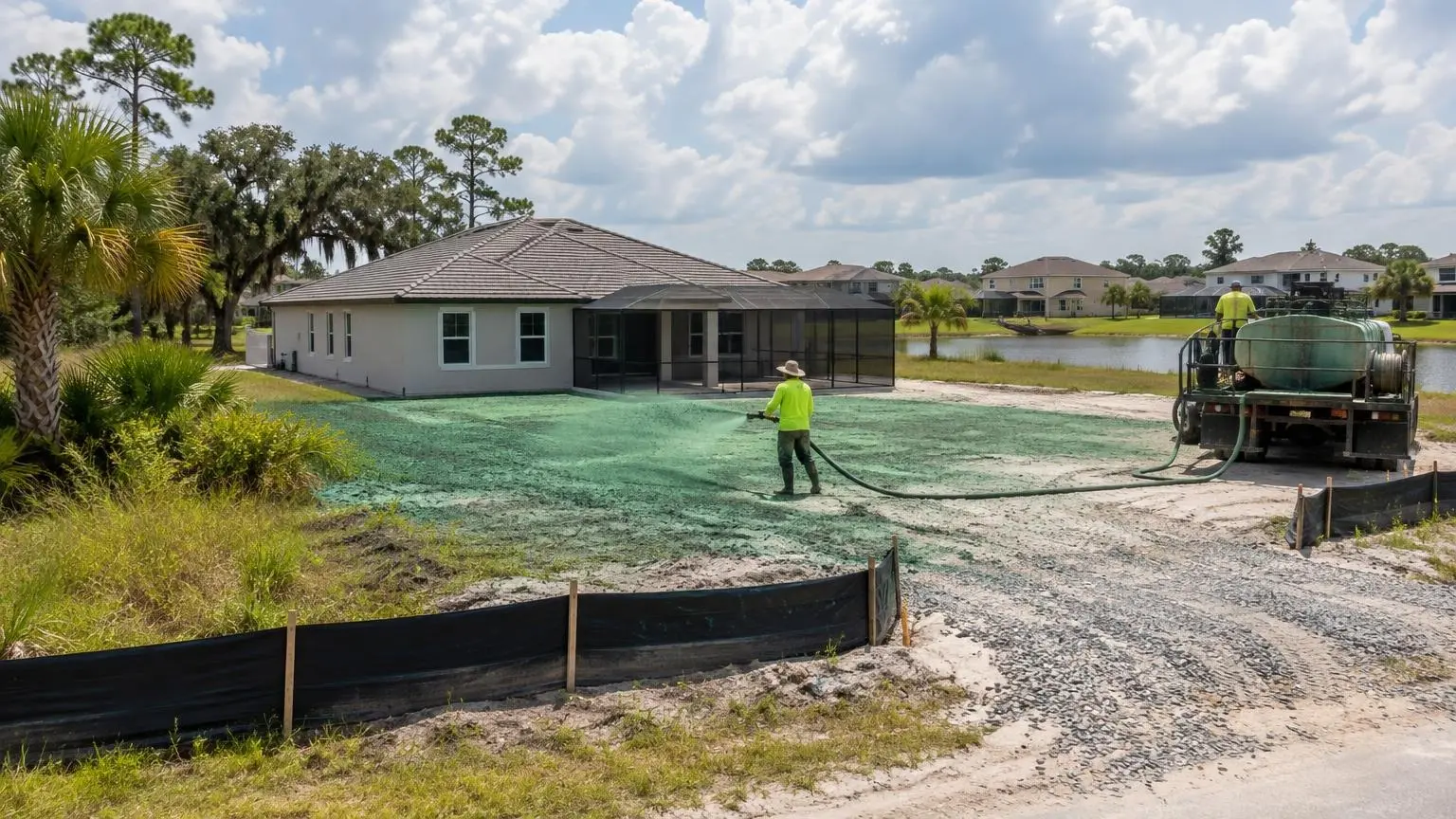
- Silt fence and inlet protection set before earthwork
Working Plant City Soil
Hydroseeding in Plant City means working with flatwoods soil. The surrounding area is part of the Southern Flatwoods, where soils are described as sandy, infertile and poorly drained. Around the city, though, higher organic matter and scattered phosphate nodules make the ground richer than typical flatwoods sand, which is part of why this became the winter strawberry capital of the world. For a lawn, that means the soil can grow grass well once water is managed.
Wet summers, wet ground
Plant City averages about 56 inches of rain a year, more than Tampa, with the heaviest rain from June through September. Flatwoods soils such as Myakka, Florida's state soil, can hold a water table close to the surface for months in the wet season. On low lots, we grade so water leaves the lawn area before seeding, and we pick a grass that tolerates damp ground.
The cold-night question
January is the coldest month here, with a mean low of 50 degrees, and the coldest nights of the year average about 30 degrees. The all-time record low is 15 degrees. Farms protect strawberries on those nights; for a lawn, it means we avoid seeding warm-season grass late in the fall and aim for spring and summer instead.
Reservoirs and old mines
South of the city, Edward Medard Park covers about 1,284 acres around a 770-acre reservoir. The site was mined for phosphate in the 1960s, and a dike and reservoir were built in 1970 to protect areas along the Alafia River from flooding. Former mined and reclaimed land shows up on private parcels too, and those uneven sites often need grading, topsoil and a stronger mulch.
Farm edges and new homes
Plant City grew about 14.5 percent between 2010 and 2020. New homes next to working fields, warehouses along I-4 and rural driveways all create bare ground that needs cover. We seed lawns, stabilize ditches and set silt fence around sites that drain toward farm ditches or roads.
Get started
Get a free estimate or call (813) 343-2450.
Plant City Soil and Climate Facts
- Flatwoods soil. Plant City lies in the Southern Flatwoods, where soils are sandy, infertile and poorly drained, though local organic matter and phosphate nodules add fertility.
- Heavy rainfall. Annual precipitation averages 56.11 inches, with the heaviest rain from June through September.
- Cold nights. The mean minimum on the coldest nights is 30.3 degrees F, and the all-time record low is 15 degrees F.
- Flood reservoir. Edward Medard Park's 770-acre reservoir and dike were built in 1970 on former phosphate land to reduce Alafia River flooding.
Plant City Questions
Is Plant City soil good for grass?
It can be. Local soil is richer than most flatwoods sand, but drainage is the issue. Fix where water sits first, then seed.
When is too late in the year to seed?
For warm-season grass, we avoid late fall because the coldest nights here can stall young seedlings. Spring and summer work best.
Can you stabilize a ditch next to a field?
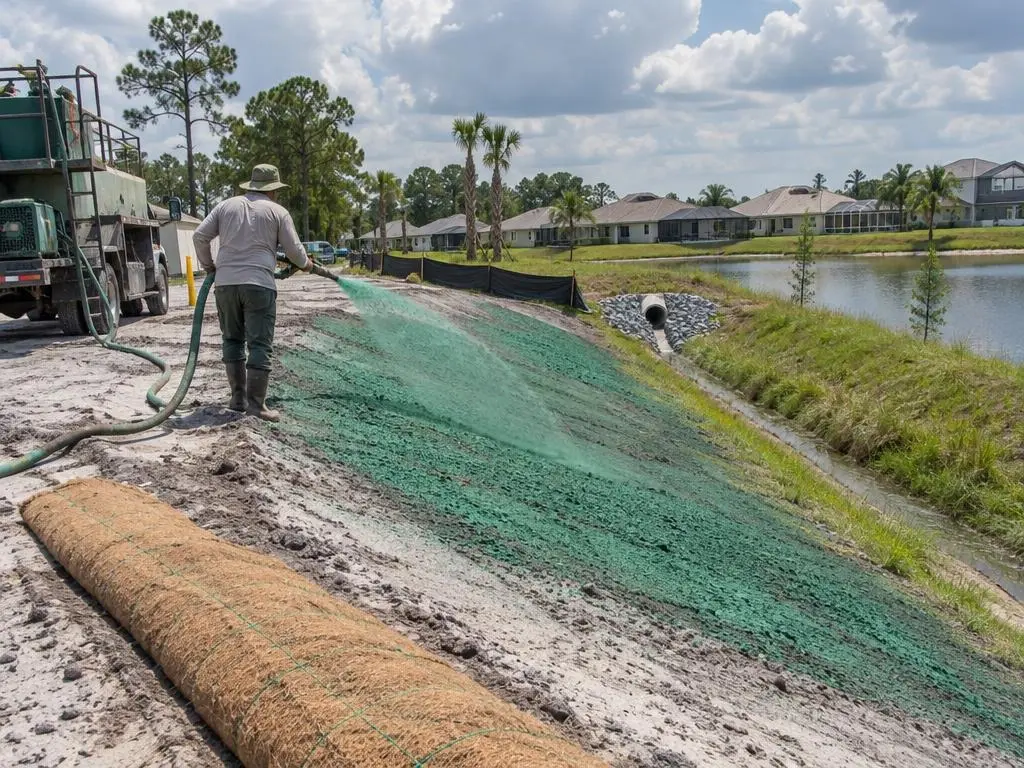
Yes. Ditch banks get hydromulch or erosion control blankets depending on slope and flow.
Do warehouse and commercial sites need silt fence?
Most larger sites do during grading. We can install it, maintain it, then seed the ground so it can come out.
My lot is old mine land. What changes?
Expect uneven ground and patchy soil. We usually grade, add topsoil where needed, and use a heavier mulch.
Free Estimates in Plant City, FL
Free estimates in Plant City and nearby farm country.
Hydroseeding Near Plant City
- Hydroseeding in Tampa, FL
- Hydroseeding in Brandon, FL
- Hydroseeding in Riverview, FL
- Hydroseeding in Valrico, FL
- Hydroseeding in FishHawk, FL
- Hydroseeding in Lithia, FL
- Hydroseeding in Temple Terrace, FL
- Hydroseeding in Thonotosassa, FL
- Hydroseeding in Seffner, FL
- Hydroseeding in Apollo Beach, FL
- Hydroseeding in Ruskin, FL
- Hydroseeding in Sun City Center, FL
- Hydroseeding in Wesley Chapel, FL
- Hydroseeding in Land O' Lakes, FL
- Hydroseeding in Zephyrhills, FL
- Hydroseeding in New Port Richey, FL
- Hydroseeding in St. Petersburg, FL
- Hydroseeding in Clearwater, FL
- Hydroseeding in Largo, FL
- Hydroseeding in Oldsmar, FL
- Hydroseeding in Safety Harbor, FL
- Hydroseeding in Tarpon Springs, FL