
Bay city, low ground, big summer storms
Hydroseeding in Tampa, FL
Seed, mulch and sediment control for a city where the highest ground is 48 feet above the bay.
- We come out, measure, and quote in writing at no charge
- Seed choice matched to sun, irrigation and soil
- Silt fence and inlet protection set before earthwork
Getting Grass to Take Hold in Tampa
Hydroseeding in Tampa starts with water: the city covers about 176 square miles, and more than a third of that is water, from Old Tampa Bay and Hillsborough Bay to the Hillsborough and Palm rivers. The highest point inside city limits is only 48 feet above sea level, so most yards and job sites are flat, sandy and quick to shed sediment toward a ditch, inlet or seawall when a storm hits bare soil.
Planting around the wet months
Tampa averages close to 49.5 inches of rain a year, the bulk of it falling between late May and early October, often as short afternoon thunderstorms. That pattern helps a new hydroseed lawn because the slurry and the seed stay moist without daily hand watering, but it also means a freshly graded lot can wash before the mulch has bonded. We schedule spraying for a dry window, and any grade that sheds water toward a street gets a thicker hydromulch application or a bonded fiber matrix.
November is the dry gap
November is usually the driest month, and the brush fire season runs from late March through May. Seed sprayed in those stretches needs a reliable irrigation plan, so we talk through sprinkler coverage before we quote a dry-season job.
City rules on bare soil
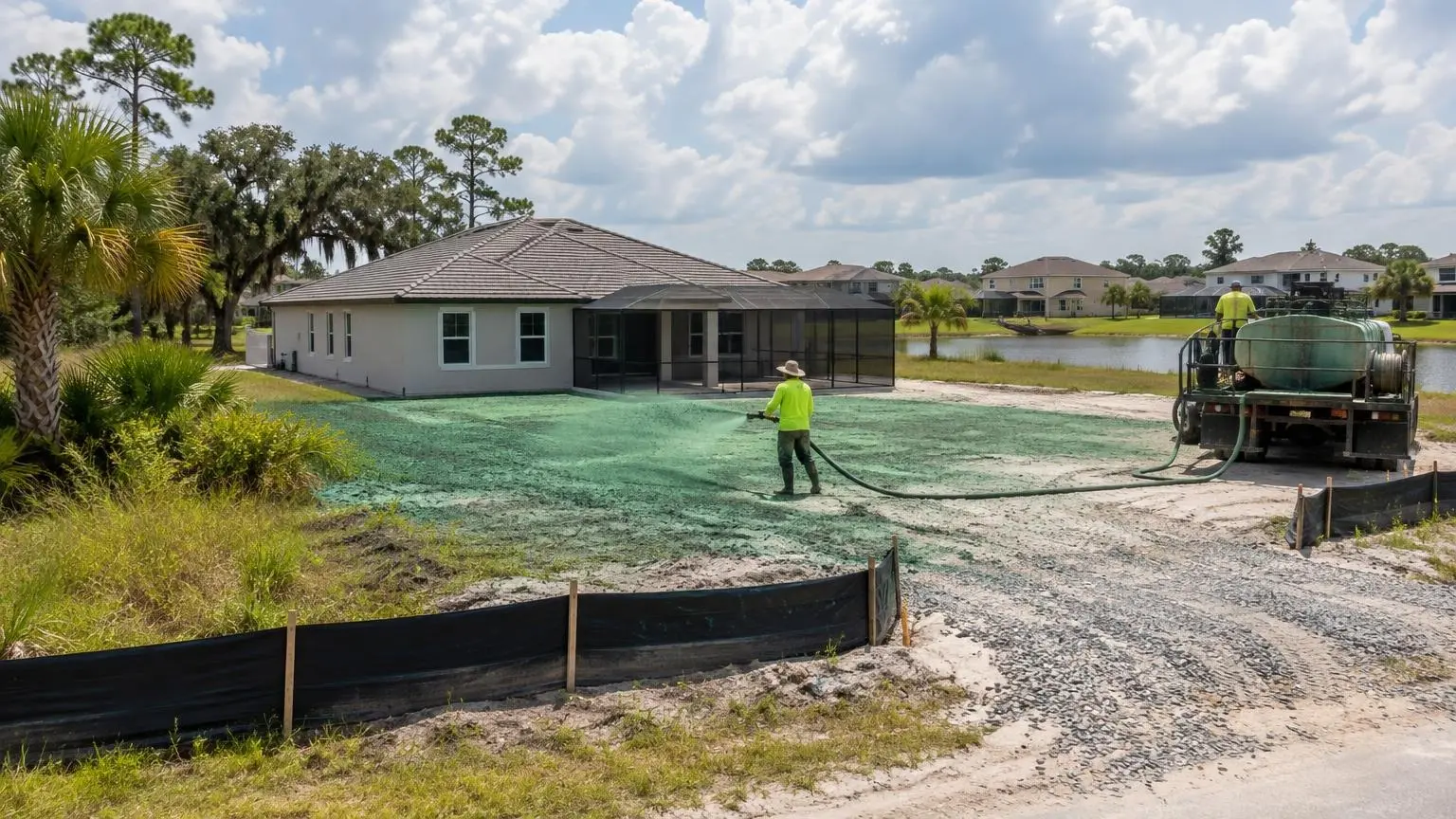
The City of Tampa states plainly that it is illegal to discharge soil and sediment off site. Its planning guidance asks for silt fence to go in before earthwork starts and stay up for the whole job, with inlets protected and construction entrances stabilized. On commercial pads and infill lots we can install the silt fence, protect the inlets, then hydroseed or hydromulch the disturbed ground so the controls can come out once grass covers it.
New Tampa and older neighborhoods
New Tampa began in 1988 when the city annexed about 24 square miles of mostly rural land between I-275 and I-75. Neighborhoods built since then commonly include retention ponds and graded swales that need cover. Closer to the bay, the work is more often lawn renovation after a tear-out, regrading a yard that holds water, or seeding a pond bank.
Where to start
Tell us the size of the area, how the ground drains and whether you have irrigation. Get a free estimate or call (813) 343-2450.
Tampa Ground and Weather Facts
- Low, flat city. Tampa's highest natural point is 48 feet above sea level, and water makes up about 35 percent of the city's area.
- Rainy season. Annual rainfall averages 49.48 inches (1991-2020), with the rainy season running from late May to early October.
- Sediment rules. The City of Tampa says it is illegal to discharge soil and sediment off site and asks for silt fence before earthwork begins.
- New Tampa. The city annexed about 24 square miles of mostly rural land between I-275 and I-75 in 1988, the start of New Tampa.
Tampa Questions
Is summer a bad time to hydroseed in Tampa?
Not usually. The rainy season keeps seed moist, which helps germination. The risk is a heavy storm on the first day or two, so we watch the forecast and use a stronger mulch on sloped or exposed ground.
Does a small job inside Tampa city limits still need a sediment barrier?
The city holds contractors on large and small jobs responsible for keeping sediment on site. If bare soil can reach a street, inlet or the bay, plan on silt fence or another barrier until the seed has grown in.
Can you seed a retention pond bank in New Tampa?
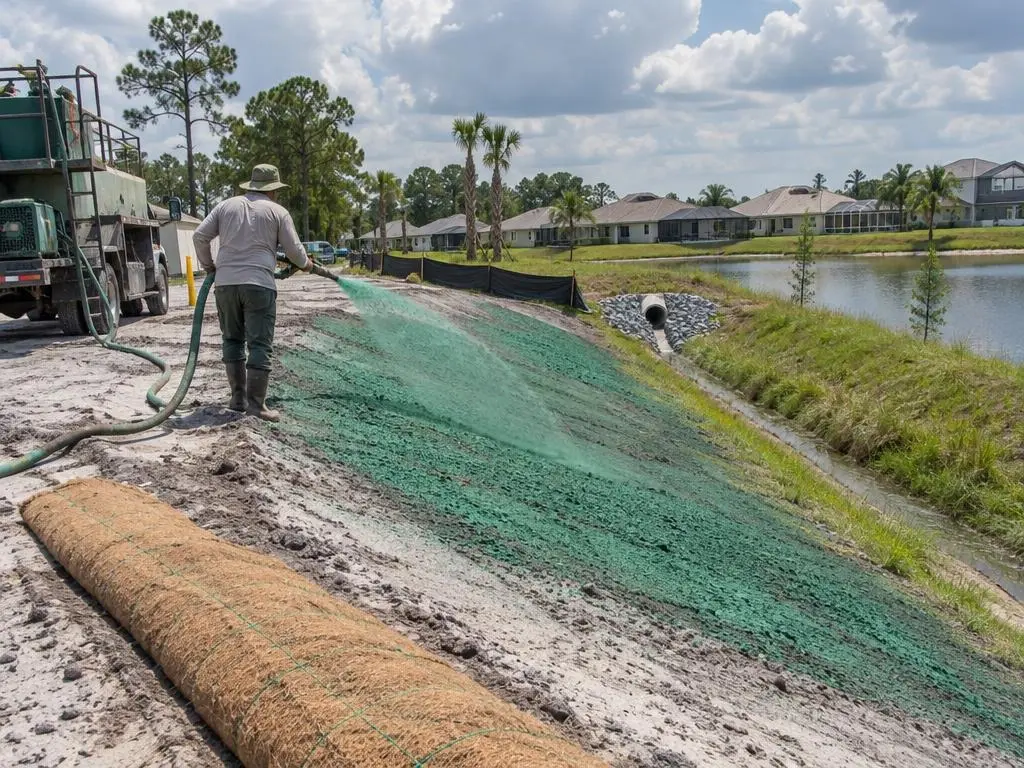
Yes. Pond banks are a good fit for hydroseeding with a bonded mulch because the slurry sticks to the slope. Check with your HOA or CDD first about which grass they allow on the bank.
How soon will a hydroseed lawn fill in during the dry season?
Slower than in summer, because the seed depends on irrigation. With regular watering you should see sprouts within a few weeks, but plan on more watering than you would need in July.
Free Estimates in Tampa, FL
Free on-site estimates across Tampa, from New Tampa to the Interbay Peninsula.
Hydroseeding Near Tampa
- Hydroseeding in Brandon, FL
- Hydroseeding in Riverview, FL
- Hydroseeding in Valrico, FL
- Hydroseeding in FishHawk, FL
- Hydroseeding in Lithia, FL
- Hydroseeding in Plant City, FL
- Hydroseeding in Temple Terrace, FL
- Hydroseeding in Thonotosassa, FL
- Hydroseeding in Seffner, FL
- Hydroseeding in Apollo Beach, FL
- Hydroseeding in Ruskin, FL
- Hydroseeding in Sun City Center, FL
- Hydroseeding in Wesley Chapel, FL
- Hydroseeding in Land O' Lakes, FL
- Hydroseeding in Zephyrhills, FL
- Hydroseeding in New Port Richey, FL
- Hydroseeding in St. Petersburg, FL
- Hydroseeding in Clearwater, FL
- Hydroseeding in Largo, FL
- Hydroseeding in Oldsmar, FL
- Hydroseeding in Safety Harbor, FL
- Hydroseeding in Tarpon Springs, FL