
Keep the dirt on site
Silt Fence & Inlet Protection in Tampa, FL
Sediment controls installed before the first load of dirt moves, and kept working until the grass is in.
- We come out, measure, and quote in writing at no charge
- Seed choice matched to sun, irrigation and soil
- Silt fence and inlet protection set before earthwork
Sediment Control Before the First Cut
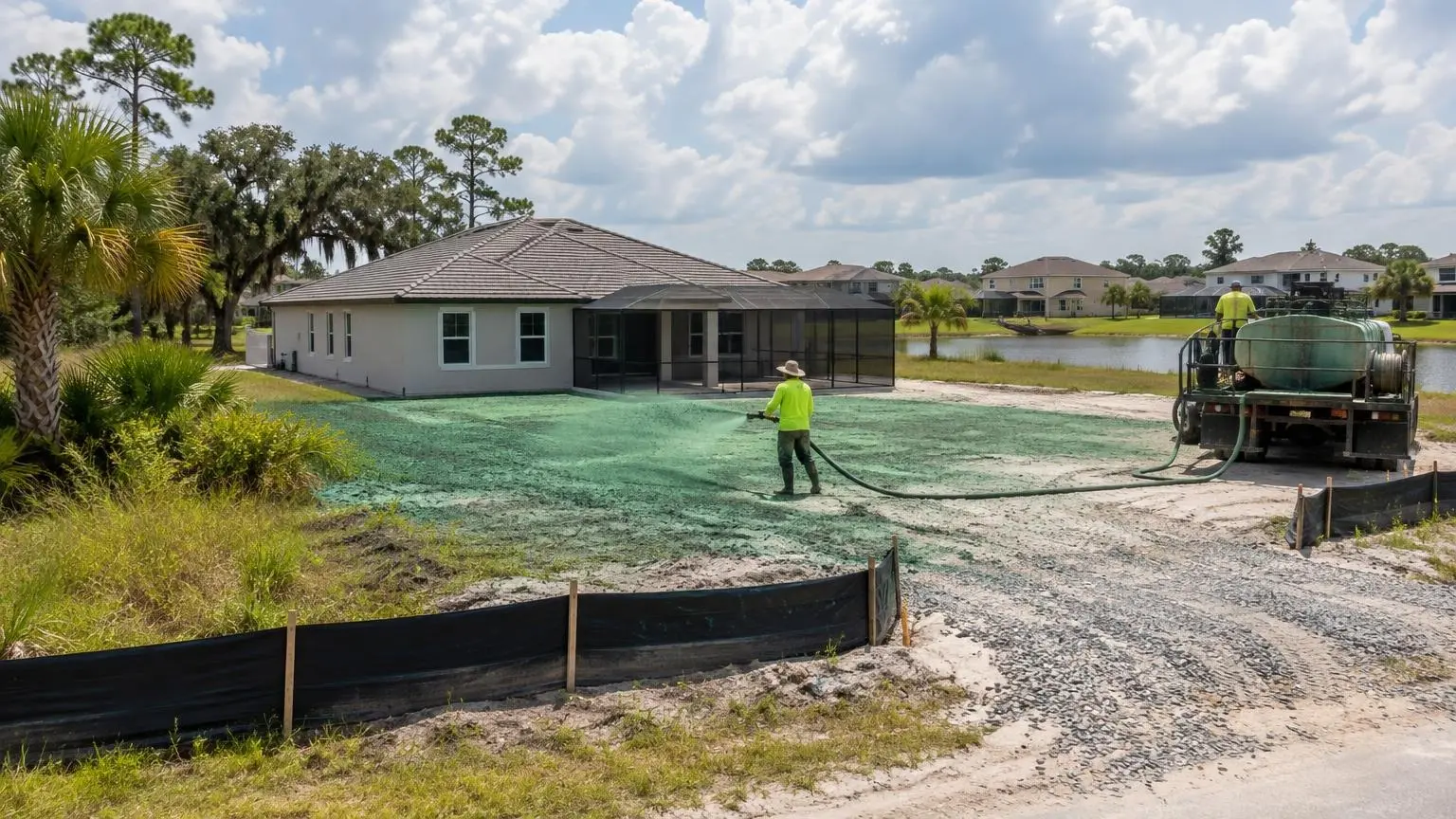
Silt fence and inlet protection in Tampa are usually the first things on a building site and the last things to come off. The City of Tampa says silt fences must be installed before any earthwork and must stay in place for the whole of construction, and that all inlets should be protected so sediment does not enter the storm system. As silt fence contractors, we install those controls, maintain them through the job, and remove them once the ground is stabilized.
Why the city cares
Tampa's storm system drains to the Hillsborough River, Hillsborough Bay, Old Tampa Bay and the ponds and canals between them. The city treats sediment leaving a site as an illegal discharge, and its inspectors routinely check that erosion and sediment controls are installed and maintained. Failing to do that can bring citations, fines or a stop-work order. A Preliminary Plan Review meeting with Construction Services is part of permitting, and the approved erosion control plan has to be followed on site.
What the city lists
The City of Tampa's list of commonly accepted methods includes a temporary gravel construction entrance, sediment (silt) fence, block and gravel inlet protection, fabric drop inlet protection, street inlet protection, dewatering that discharges only clean water, and floating turbidity barriers. The city also notes that a few small, well-maintained traps or barriers in the right places can control sediment better than a single large basin. That matches what we see: controls fail at the weak spot, not on average.
How a Tampa silt fence should go in
The fabric only filters anything if runoff is forced through it. So the bottom edge is trenched in and backfilled, not laid on top of the sand, and the posts are on the downhill side so the fabric is pressed against them. Fence runs follow the contour where possible, with the ends turned uphill so water does not just flow around them. On Tampa's loose sand, a fence that is only staked at the surface will undercut in the first big storm.
Inlet protection
Curb inlets in the street get filter inserts or barriers that let water through while catching sediment. Yard and drop inlets get fabric or block and gravel protection around the grate. Pinellas County lists inlet protection, silt fencing, turbidity curtains and construction entrances among the practices that must be maintained during construction, and requires perimeter controls before mass grading. Wherever your site is, inlets downstream of bare soil should be protected from the first day.
Maintenance and inspection
Silt fence and inlet filters fill up. Pinellas County requires that controls be inspected at least once a week and after any rain of half an inch or more. In Tampa's rainy season, that can mean several checks a week. We offer scheduled maintenance: removing built-up sediment, re-trenching undercut fence, replacing torn fabric and clearing inlet filters.
Stockpiles, entrances and dewatering
The City of Tampa also asks for a well-planned construction entrance and says construction roads, parking areas and the entrance should be stabilized immediately, with equipment kept to set routes to limit ruts and tracking. Pinellas County requires soil stockpiles to be placed carefully and protected with silt fencing, stabilization or tarps. Where a dig hits groundwater, which is common in the wet season on flatwoods soils, the city says only clean water may be discharged, usually through a dewatering bag or similar filter. We can set silt fence around stockpiles and help you plan where the entrance and spoil piles go so the fence line makes sense.
State permits on larger sites
Florida DEP's Construction Generic Permit applies when a project disturbs one acre or more, and also to smaller disturbances that fall within a larger common development plan, if stormwater leaves the site for state waters or a municipal storm system. Those sites need a stormwater pollution prevention plan, and coverage is closed with a Notice of Termination after final stabilization. Silt fence and inlet protection are usually the core of that plan, and inspectors look for them first.
Removal
Once the site is seeded or sodded and the grass is established, the fence comes out and the trench line is raked smooth and seeded. Taking it out too early is a common mistake; leaving it to rot in place is another.
Common failures we fix
- Fence laid on the surface with no trench, undercut by the first storm
- Fence run straight downhill, so water follows it instead of passing through
- Sediment piled halfway up the fabric and never cleaned out
- Inlet filters left on after paving, blocking the street drain in a downpour
- Gaps at gates and driveways where trucks run over the fence
Most of these are cheap to fix and expensive to ignore, since an inspector who finds sediment in the street is looking at the whole site, not just one bad section. When we take over maintenance on a site someone else set up, we walk the full perimeter first and list what needs fixing.
Sediment Control Work
Installed, maintained and removed by the same crew.
Perimeter silt fence
Trenched-in silt fence along the low sides of the site.
Curb inlet protection
Filters or barriers on street inlets near the work.
Drop and yard inlet protection
Fabric or block and gravel around grates on site.
Stockpile protection
Silt fence around soil and sand piles, where required.
Scheduled maintenance
Sediment removal, fence repair and filter cleaning after storms.
Removal and restoration
Pulling fence after stabilization and seeding the trench line.
Published Sediment Control Prices
| Item | Published price |
|---|---|
| Silt fence, standard, from 2025 DOT bid-item prices | $378 per 100 ft |
| Silt fence, reinforced/stabilized, same list | $748 per 100 ft |
| Inlet filter made of silt fence fabric, same list | $102 each |
| Sandbag ring around an inlet, same list | $141 each |
| Gravel-and-mesh inlet filter, same list | $172 each |
| Rock construction entrance | Set once we measure the drive |
Unit prices come from the 2025 DOT bid-item prices and are not Tampa quotes; we found no current published price for construction entrances. Fence length, ground and access vary by site. Your lot may land anywhere in these ranges; the paperwork we send you fixes the figure.
Installation Steps
1. Review the plan
We follow the approved erosion control plan or help lay out controls on small sites.
2. Set the perimeter
Silt fence trenched in along the low sides before grading begins.
3. Protect inlets
Inlets on and next to the site get the right type of protection.
4. Maintain
Weekly and after-storm checks, with repairs and sediment removal.
5. Remove
Controls come out after stabilization; trench lines are seeded.
Why Choose Us for Silt Fence & Inlet Protection
Trenched, not stapled
Fabric is buried at the bottom so water cannot run under it.
Maintenance on call
Rainy-season storms fill fences fast; we come back to clean and repair.
Seed and fence together
The same crew that seeds the site can pull the fence when the grass is in.
Silt Fence & Inlet Protection Questions
When does silt fence have to go in?
The City of Tampa says silt fence must be installed before any earthwork and stay in place for the whole of construction. Pinellas County requires perimeter controls before mass grading.
How often does silt fence need to be checked?
Pinellas County requires inspection at least weekly and after any rain of half an inch or more. In summer, that can mean several checks a week.
Do small residential jobs need silt fence?
If soil could wash off the lot, sediment controls are expected. The City of Tampa treats any soil leaving a site as an illegal discharge, regardless of job size.
Who removes the silt fence?
We can. It comes out after the area is stabilized, and we seed the trench line.
What is inlet protection?
A filter or barrier around a storm drain that lets water through but holds back sediment, so it does not reach ponds, canals or the bay.
Silt Fence & Inlet Protection Service Areas
- Hydroseeding in Tampa, FL
- Hydroseeding in Brandon, FL
- Hydroseeding in Riverview, FL
- Hydroseeding in Valrico, FL
- Hydroseeding in FishHawk, FL
- Hydroseeding in Lithia, FL
- Hydroseeding in Plant City, FL
- Hydroseeding in Temple Terrace, FL
- Hydroseeding in Thonotosassa, FL
- Hydroseeding in Seffner, FL
- Hydroseeding in Apollo Beach, FL
- Hydroseeding in Ruskin, FL
- Hydroseeding in Sun City Center, FL
- Hydroseeding in Wesley Chapel, FL
- Hydroseeding in Land O' Lakes, FL
- Hydroseeding in Zephyrhills, FL
- Hydroseeding in New Port Richey, FL
- Hydroseeding in St. Petersburg, FL
- Hydroseeding in Clearwater, FL
- Hydroseeding in Largo, FL
- Hydroseeding in Oldsmar, FL
- Hydroseeding in Safety Harbor, FL
- Hydroseeding in Tarpon Springs, FL
Get a Silt Fence & Inlet Protection Estimate
Silt fence and inlet protection estimates for Tampa sites.