
Bare sand to green yard
New Lawn Hydroseeding in Tampa, FL
A hydroseed lawn sprayed on prepared soil, with the right seed for sun, sand and how you water.
- We come out, measure, and quote in writing at no charge
- Seed choice matched to sun, irrigation and soil
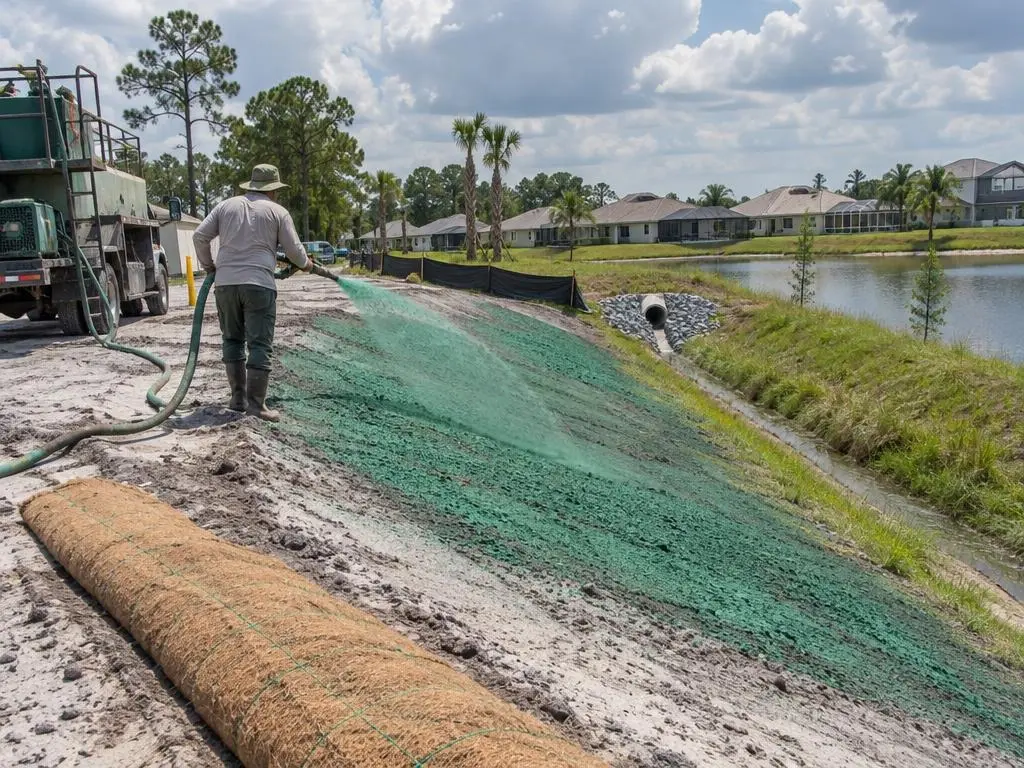
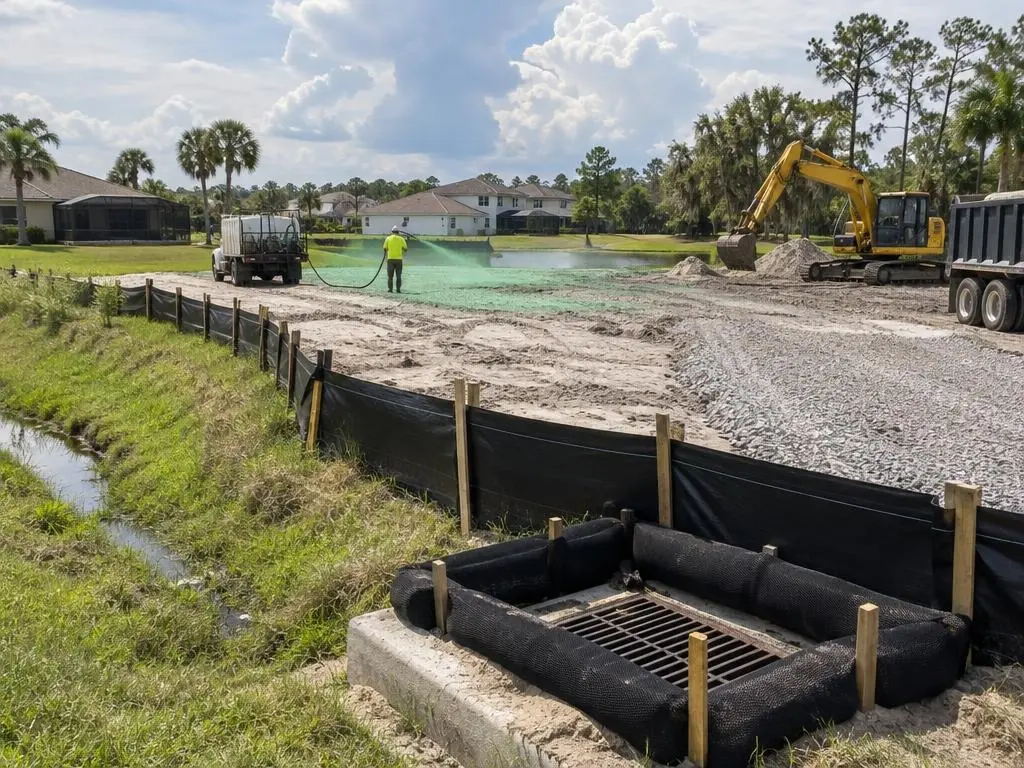
- Silt fence and inlet protection set before earthwork
Starting a Lawn From Bare Ground
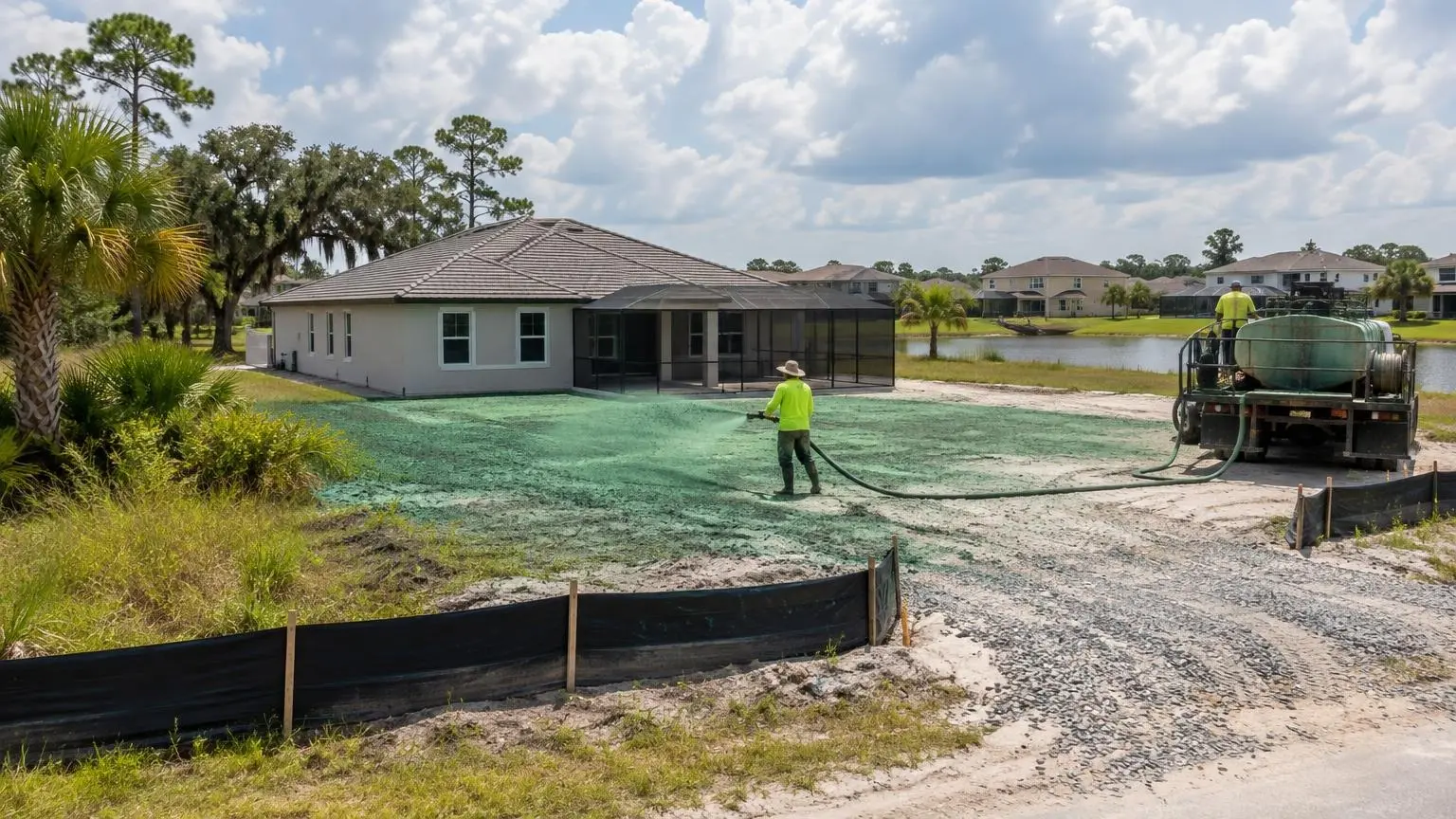
New lawn hydroseeding in Tampa is how many homeowners turn a builder's bare sand, a torn-up yard after a pool or septic job, or a lot that never filled in into a real lawn. We prepare the soil, choose seed that suits the site, then spray it on mixed with wood fiber mulch, fertilizer, tackifier and water, a blend that clings to the sand and keeps the seed moist while it sprouts. It is a lawn installation option that costs well below sod and protects seed far better than throwing it by hand.
Who it fits
Hydroseeding makes the most sense on larger areas, side and back yards that sod pallets cannot easily reach, and places without irrigation where a drought-tough grass is the goal. It is also a good choice when you want to fix a big area at once instead of patching. It is not the right call for every yard, and we say so on the visit.
The St. Augustine question
Many Tampa lawns are St. Augustinegrass, and UF/IFAS is clear that it does not come from seed; you start it with sod, plugs or sprigs. If a deep green, carpet-like St. Augustine lawn is what you want, sod is the route. Hydroseeding here means grasses that grow from seed, mainly bahiagrass and centipedegrass.
Choosing the seed
Bahiagrass is the workhorse for sandy, infertile ground. UF/IFAS says it forms a deep root system, needs little water or fertilizer, and suits big lots or areas with no irrigation. The Argentine variety forms a denser, darker lawn and is usually preferred for turf; Pensacola produces more seed heads and is better left for roadsides and pasture edges. Bahia will brown and go dormant in a long dry spell and come back with rain. Centipedegrass is a slower, lower-maintenance grass suited to central and north Florida, sown at about 4 ounces per 1,000 square feet, and it prefers acidic soil. It is prone to yellowing and nematode trouble in the sandiest ground, so we check the site before suggesting it.
Soil prep is most of the job
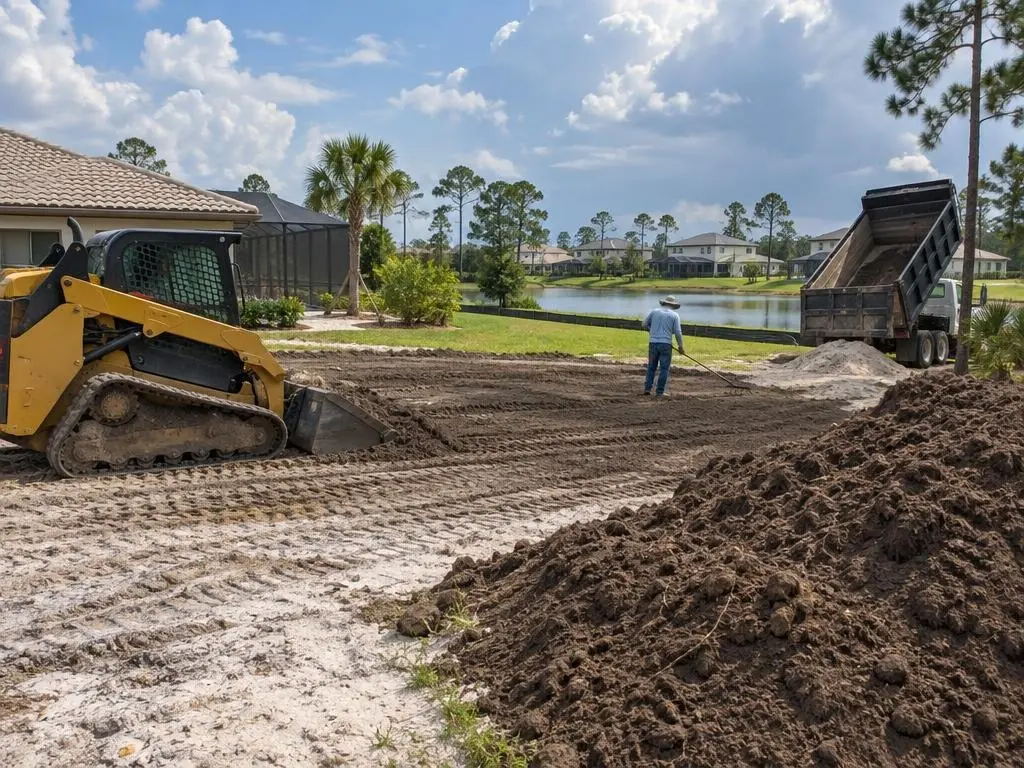
UF/IFAS says to clear debris, roots and stumps, slope the yard 1 to 2 percent away from the house, test the soil, and till 6 to 8 inches deep when amendments go in. On pure sand with almost no silt or clay, tilling alone does not last; compost is what gives the soil some structure. Around new homes the ground is usually compacted by construction traffic, sometimes more than a foot down. A simple test UF suggests: if you cannot push a screwdriver or rod 6 inches into moist soil by hand, roots will struggle too.
Timing in Tampa
UF/IFAS says bahiagrass can be established any time of year in much of Florida, with slower growth as it cools. Centipedegrass does best when seeded April through July, and UF advises against fall seeding it. Tampa's rainy season, from late May into early October, does a lot of the watering, but heavy afternoon storms are also the biggest threat to freshly sprayed seed on bare sand. We adjust mulch and tackifier rates for the season.
Hydroseed, sod or bag of seed
A hydroseed lawn sits in the middle on price and speed. By HomeGuide's numbers, laying sod costs $1 to $4 a square foot and hydroseeding $0.12 to $0.35, while dry broadcast seed is cheaper still but sits exposed on the surface. The University of Nebraska Extension notes that hydroseeded grass generally shows in 5 to 7 days, where dry-seeded grass can take two to three weeks. On a big Tampa back yard with bahia as the goal, that gap in cost is the main reason people choose hydro seeding. On a small front yard where you want St. Augustine and a finished look by the weekend, sod wins.
Irrigation and the first month
UF/IFAS recommends that any irrigation system be designed and installed before the grass goes in, and that it water lawn areas separately from shrubs. For new seed, short and frequent is the rule: the top half inch of sand dries in hours on a sunny day. If you do not have irrigation, plan the job for the rainy season and expect to drag hoses during dry stretches. Bahia is the forgiving choice for yards with no system; it will survive dry spells by going dormant once it is established. Follow any watering restrictions that apply to your address, since new-lawn allowances vary by utility.
After we spray
National guides say seed starts coming up in roughly 5 to 14 days and is ready for a first mow in about 4 to 6 weeks; bahia is often slower. Keep the surface damp with short, frequent watering until the grass is up, then water less often and deeper. Hold off on fertilizer for 30 to 60 days after planting, as UF/IFAS advises, and mow high the first few times.
What a New Lawn Includes
Every hydroseed lawn starts with the ground under it.
Site clean-up
Removing construction debris, roots, rocks and weeds before any seed goes down.
Rough and fine grading
Shaping the yard to fall away from the house and smoothing the seedbed.
Soil amendment and tilling
Compost or topsoil worked into compacted or bare sand where the site needs it.
Seed selection
Bahia, centipede or a mix chosen for sun, irrigation and use.
Slurry application
One pass of the hose lays down the seed with wood fiber mulch, a starter fertilizer and tackifier, as an even, green-tinted coat.
Watering plan
A written schedule for the first weeks, adjusted for rainy or dry season.
Typical Hydroseeding Cost for a Lawn
| Job | Published range |
|---|---|
| HomeGuide's per-square-foot range | $0.12 to $0.35 |
| Angi's per-square-foot range | $0.07 to $0.26 |
| Typical 5,000 sq ft yard, per HomeGuide | $1,000 to $1,750 |
| Average home job reported by HomeAdvisor | $650 to $2,200; average $1,000 |
| Smallest job most crews take (HomeGuide) | $300 to $500 or more |
| Extra for steep ground (HomeGuide) | +$0.05 to $0.10 per square foot |
| Laid sod instead, for contrast (HomeGuide) | $1 to $4 per sq ft |
These are published national ranges, not prices we collected in Tampa, and soil, access, slope and size move the number on every yard. Your lot may land anywhere in these ranges; the paperwork we send you fixes the figure.
From Visit to First Mow
1. Walk the yard
We check soil, drainage, slope, shade and how the area will be watered.
2. Written estimate
Grading, soil prep and seeding each get their own line.
3. Prepare the ground
Clear, grade, till and amend so seed lands on loose, level soil.
4. Spray the slurry
Even coverage, heavier on edges and any slope that will shed water.
5. Grow-in
You follow the watering plan; we answer questions until the first mow.
Why Choose Us for New Lawn Hydroseeding
Straight talk on grass type
If seed cannot give you the lawn you want, we say so before you pay for it.
Prep priced openly
Tilling, compost and grading are listed, not buried in a per-foot number.
Season-aware slurry
Mulch and tackifier rates go up when summer storms are due.
New Lawn Hydroseeding Questions
What does hydroseeding a Tampa yard usually run?
Published national ranges for hydroseeding cost start near $0.07 and top out around $0.35 a square foot, and HomeGuide's example of a 5,000 square foot lawn comes to $1,000 to $1,750. Soil prep, grading and slopes add to that, and most companies have a minimum fee. We price your yard in writing after a visit.
Can I hydroseed St. Augustinegrass?
No. According to UF/IFAS, St. Augustinegrass has to be started from sod, plugs or sprigs. If you want St. Augustine, plan on sod.
Will a seeded bahia or centipede lawn hold up next to sod?
It takes longer to fill in, so for the first weeks sod looks better. Once established, a well-prepared seeded lawn can be just as healthy, at a fraction of the cost. Sod is still the better choice on steep mounds and for grasses that do not seed.
How often do I water new hydroseed?
Keep the surface damp until the grass is up. In Tampa heat that usually means several short waterings spread through the day, then taper to deeper, less frequent watering. Skip a cycle after a soaking storm.
When can I walk on it?
Stay off the new grass, and keep dogs and the mower off too, until it is up and rooted, usually around four to six weeks. Light walking to move a hose is fine.
New Lawn Hydroseeding Service Areas
- Hydroseeding in Tampa, FL
- Hydroseeding in Brandon, FL
- Hydroseeding in Riverview, FL
- Hydroseeding in Valrico, FL
- Hydroseeding in FishHawk, FL
- Hydroseeding in Lithia, FL
- Hydroseeding in Plant City, FL
- Hydroseeding in Temple Terrace, FL
- Hydroseeding in Thonotosassa, FL
- Hydroseeding in Seffner, FL
- Hydroseeding in Apollo Beach, FL
- Hydroseeding in Ruskin, FL
- Hydroseeding in Sun City Center, FL
- Hydroseeding in Wesley Chapel, FL
- Hydroseeding in Land O' Lakes, FL
- Hydroseeding in Zephyrhills, FL
- Hydroseeding in New Port Richey, FL
- Hydroseeding in St. Petersburg, FL
- Hydroseeding in Clearwater, FL
- Hydroseeding in Largo, FL
- Hydroseeding in Oldsmar, FL
- Hydroseeding in Safety Harbor, FL
- Hydroseeding in Tarpon Springs, FL
Get a New Lawn Hydroseeding Estimate
Free yard visits and written lawn estimates in Tampa.